
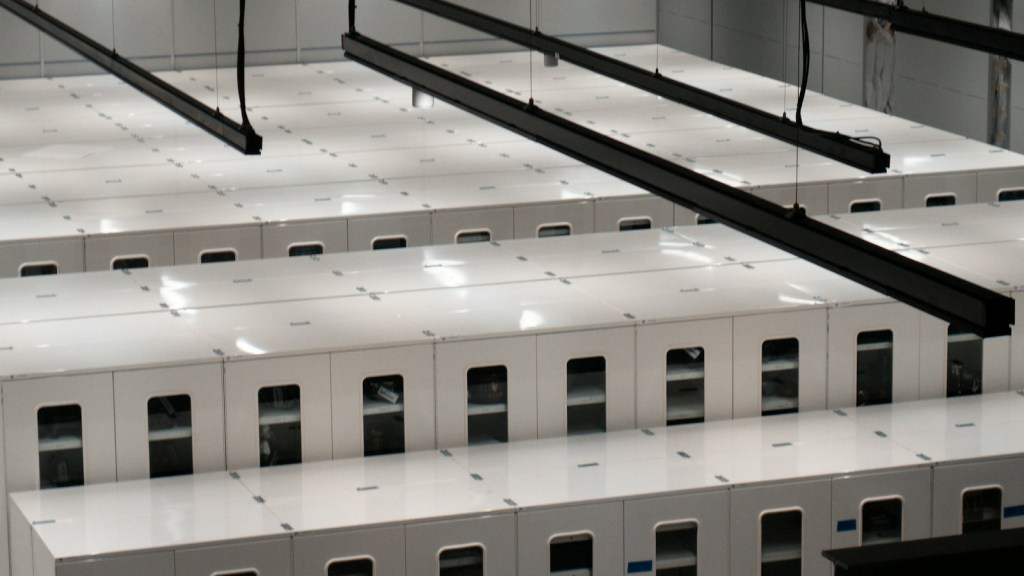
London-headquartered AI infrastructure developer RHAELM has agreed to pay US vehicle maker Workhorse Group $10m to build a full-scale manufacturing specification unit of TerraPod, a factory-built modular data centre. The two companies have also signed a non-binding letter of intent covering a contingent first order of 150 TerraPod systems.
What was announced
Workhorse, which is listed on Nasdaq and based in the Detroit area, announced the partnership on 29 October. Under a Manufacturing Spec Unit Purchase Agreement, RHAELM (Rhaelm Holdings Limited) will fund the construction of a single full-scale TerraPod unit that will serve as the manufacturing specification for later production.
The companies describe TerraPod as an integrated, rapidly deployable unit combining compute, power distribution, cooling, communications, systems control and fire suppression. It is designed to be built on a production line and installed on deployment-ready foundations. Workhorse did not disclose the unit’s power rating, dimensions or cooling technology.
RHAELM chief executive Bradd Lewis said that “AI’s limiting factor today isn’t ambition, it’s power and compute.”
Key numbers and conditions
- $10m: payment from RHAELM for the manufacturing spec unit.
- 150 systems: the contingent initial order outlined in the letter of intent. It depends on a signed supply agreement, RHAELM’s acceptance of the platform, definitive documentation and internal approvals.
- 31 December 2026: target date for executing the supply agreement.
- Late 2027 or early 2028: when Workhorse believes TerraPod production could begin, at its plant in Union City, Indiana.
Workhorse will also receive a right of first refusal on future RHAELM projects in the United States, and may become a supply-chain provider to a wider RHAELM “blueprint” collaboration, subject to the consent of that consortium.
Who RHAELM is
RHAELM’s model is to partner with power generators that hold committed capacity and build AI infrastructure behind the meter, bringing power, compute and capital together in single projects. On 1 October it signed a memorandum of understanding with Japanese generator JERA and Dell Technologies; the first project under that collaboration is planned at JERA’s Chiba Thermal Power Station with up to 400MW of capacity. The Workhorse announcement does not name any European deployment sites, and says only that RHAELM is developing projects globally.
Why it matters for modular and edge in Europe
The deal is an early-stage, largely conditional agreement, and production remains more than a year away. But it is a further sign that UK-based developers are treating standardised, factory-built compute units as the fastest way to put capacity next to available power, rather than waiting for grid connections to large purpose-built halls.
Behind-the-meter siting at existing generation is a model that has drawn growing interest in Europe as connection queues lengthen, and modular units are well suited to it because they can be delivered in phases and relocated if needed. The entry of an automotive manufacturer into the segment also reflects a broader push to borrow production-line methods from other industries to cut deployment times.
For European buyers, the key questions will be the unit’s specification once disclosed, whether it is certified for European electrical and fire standards, and whether RHAELM brings any of its 150-unit pipeline to the UK or continental sites.


Leave a Reply