
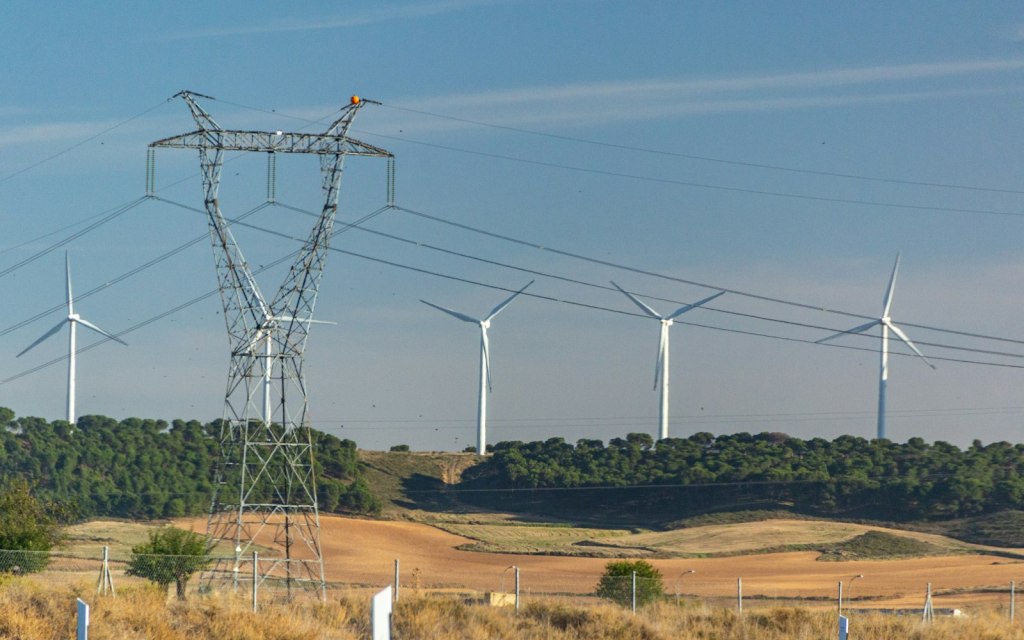
Spain’s Council of Ministers has approved a royal decree that makes grid access for data centres above 10MW conditional on covering 80% of their electricity use with new renewable generation, matched hour by hour. The final text, adopted on 20 November, also sets interim efficiency limits and digital sovereignty rules, while leaving smaller edge-scale facilities outside its toughest energy requirements.
What the decree requires
The regulation was proposed jointly by the Ministry for the Ecological Transition (MITECO), the economy ministry and the digital transformation ministry. Its core applies to large data centres with more than 10MW of electrical capacity, which must now meet a set of conditions to obtain access and connection rights to the electricity grid.
The central requirement is that at least 80% of a facility’s consumption is matched by renewable generation in the same hour. The obligation remains in force until renewables account for more than 90% of Spain’s electricity mix. An additionality test also applies: as a general rule, the renewable capacity used to meet the 80% must have entered the system no more than 36 months before the data centre starts operating, with exceptions for solar PV, certain biomass plants and repowering projects. Self-consumption, energy storage and supply contracts longer than six years can all count towards the target.
A flexibility route, compensation payments and deadlines
For five years from approval, operators can choose an alternative path if they join Spain’s automatic power-reduction system and accept priority disconnection. Under that regime, they need to show 60% additional renewable consumption during peak (P1) hours until 31 December 2028, rising to 70% across peak and mid-peak (P1 and P2) hours for the remainder of the five-year period.
Compliance will be checked once facilities are running. Deviations trigger automatic compensation charges on the data centre’s electricity bill, proportional to the shortfall, with the proceeds directed to the system’s capacity mechanisms. Separate sanctions can extend to a three-year suspension of grid access rights. Projects already in the pipeline have six months to adapt, or three months if they are awaiting a grid access tender, and may instead give up their access rights without losing their guarantees.
Efficiency, transparency and sovereignty
Until the European Commission’s data centre rating scheme and a Spanish methodology for different climate zones are in place, the decree sets transitional limits of a PUE of 1.25 or lower and a WUE of 0.1 or lower. Facilities above 500kW must report energy and sustainability data to MITECO each year in line with Delegated Regulation (EU) 2024/1364, and those above 1MW must also state how they follow the European Code of Conduct on data centre energy efficiency.
Sovereignty requirements apply to facilities hosting public information systems in the highest category of Spain’s National Security Framework, such as health, tax, energy and transport systems, whatever their size. These include keeping the most sensitive data within the European Economic Area, having staff and resources in the EU or EEA, and effectively controlling access from third countries during support and maintenance.
The government justified the rules on cost grounds. Ecological Transition Minister Sara Aagesen said that, under one of its scenarios, the absence of the decree could add around €5 billion to electricity bills and raise industrial power costs by about 25%. According to DCD, the minister also said Spain has already granted 15GW of grid access permits to data centres.
Why it matters for modular and edge in Europe
The 10MW threshold, raised from 1MW in the original August draft, now draws a clear regulatory line in one of Europe’s fastest-growing markets. Regional edge and modular deployments below that size avoid the hourly-matching and additionality tests, although they remain subject to reporting from 500kW and, where they host critical public systems, to the sovereignty rules.
For larger projects, the decree rewards designs that can flex demand or bring their own storage, since batteries count towards the renewable target and curtailable loads qualify for the alternative regime. That may favour phased, modular builds paired with on-site generation and storage. Spain’s approach, linking grid access to how a data centre’s demand affects the wider system, is also likely to be watched by other European governments facing similar connection queues.
Sources
- MITECO – El Gobierno aprueba el Real Decreto para la sostenibilidad energética, medioambiental y de resiliencia y soberanía digital de los centros de datos (20 November 2026)
- Energía Estratégica – España aprueba el nuevo marco para centros de datos (21 November 2026)
- DCD – Spain approves decree on data centers to curb electricity costs (23 November 2026)
- Euronews – Spain requires data centres to draw 80% of their electricity from renewables (20 November 2026)



Leave a Reply