
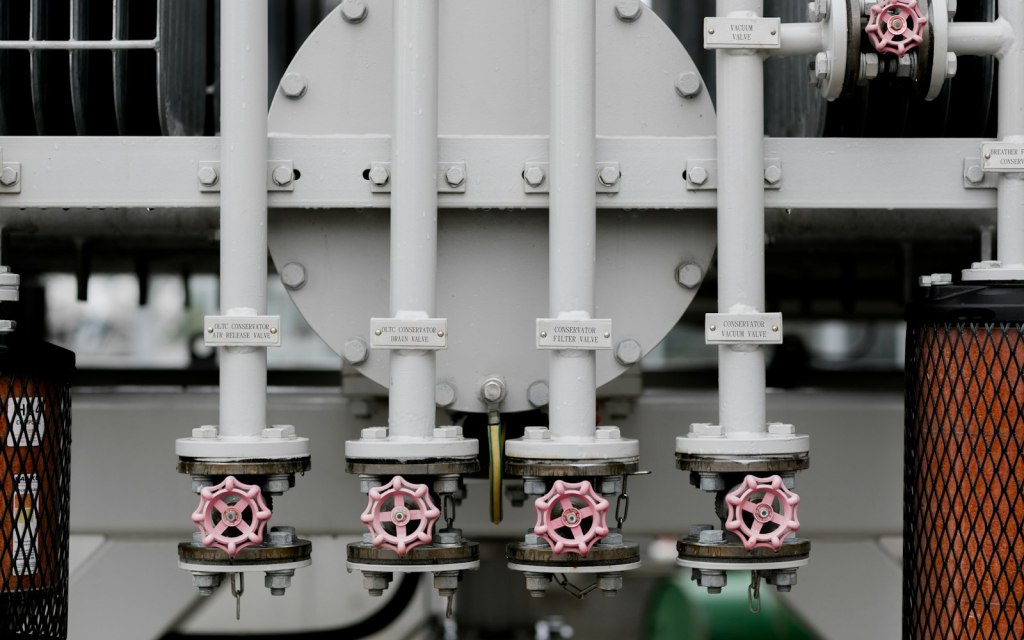
Waste heat from Swiss operator Green’s data centres in Dielsdorf, north of Zurich, is now heating residential buildings, after energy company Energie 360° commissioned an energy centre on the campus on 19 November. The district heating network is being extended in stages and is planned to serve up to 11,500 households, as well as businesses, across six municipalities.
What happened
Green’s Metro-Campus Zurich in Dielsdorf has recovered heat from its data halls since the first facility there opened in January 2023, but until now it was used on the campus itself and by a neighbouring industrial company. The new energy centre, built and run by Energie 360°, prepares that heat for a public district heating network, and the first homes have now been connected.
The network is being expanded step by step, with pipelines towards Regensdorf already under construction. Once complete, it is intended to supply heating and hot water to homes, industry and commerce in Dielsdorf, Niederhasli, Steinmaur, Regensdorf, Buchs and Dällikon, replacing fossil-fuel heating systems with a local heat source.
How the system works
According to DCD, the recovered heat is raised to around 70°C at the energy centre before being distributed, and the cooled water returning from the network is used to support data centre cooling. Green says the technical groundwork for heat extraction was laid when the campus was first planned, rather than retrofitted later.
The operator also points to cooling that uses outdoor air and closed circuits with no water consumption, and to renewable electricity for its operational infrastructure. Its emergency power systems can, if required, provide tertiary balancing energy to the Swiss grid. Chief executive Roger Süess described the Dielsdorf scheme as what the circular economy looks like “in practice”.
Green currently runs seven data centres in the greater Zurich area, with two more under construction and further projects planned in Switzerland and Germany. DCD reports that the company’s fourth data centre at its Lupfig campus is designed to supply heat to a local network there, and that heat recovery is also planned for a new campus in Birr.
Context
Heat reuse is becoming a regular feature of European data centre projects, encouraged by the EU’s Energy Efficiency Directive and by national rules in countries such as Germany. Switzerland is outside the EU, but planners and municipalities there face the same questions about how growing digital infrastructure fits into local energy systems. Recent schemes elsewhere in the region, from Nordic campuses to smaller Swiss facilities, follow a similar model in which a utility partner upgrades low-temperature server heat for a municipal network.
Why it matters for modular and edge in Europe
Dielsdorf is a large campus, but the lessons carry over to smaller sites. Edge and modular facilities are often placed close to towns and business parks, which puts them near potential heat users. Designing heat extraction in from the start, as Green did, is far cheaper than adding it later, and modular plant can include heat-exchange connections as a standard option.
The project also shows the role of the energy partner. Server heat is low grade, so it usually needs upgrading by a utility before it is useful for homes. For operators seeking planning consent and community support, a credible heat offtake arrangement is increasingly part of the case for a new site.
Sources
- Green – Green data centers supply heat for the Dielsdorf and Regensdorf region (press release, 19 November 2026)
- Solarserver – Abwärme aus Rechenzentren heizt erstmals Wohnungen im Wärmeverbund Dielsdorf (20 November 2026)
- DCD (via BeBeez) – Swiss data center firm Green hooks up data center to heating network in Dielsdorf (23 November 2026)


Leave a Reply