
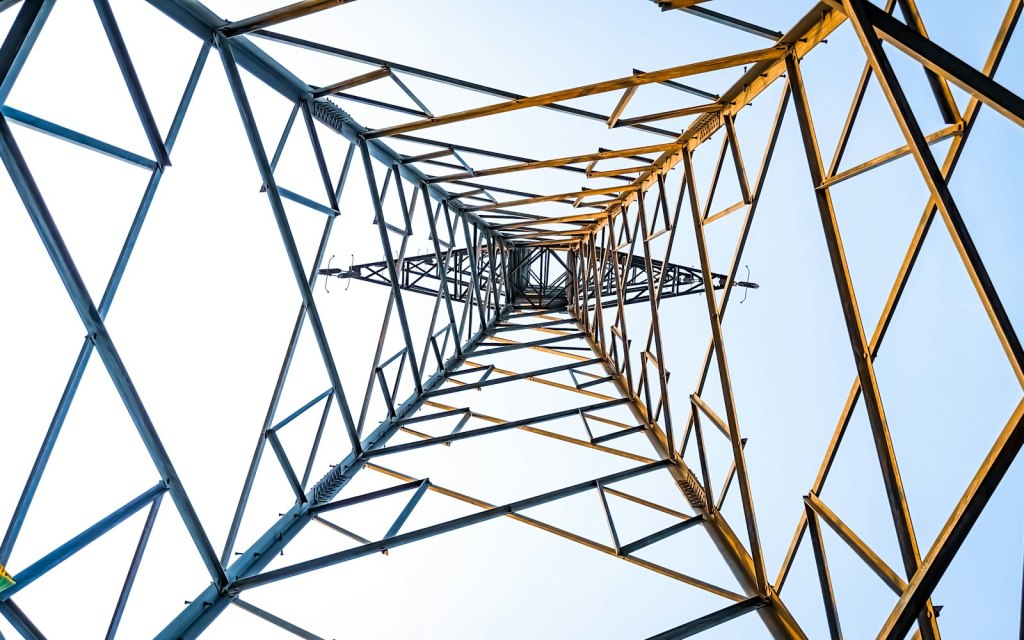
Digital Realty has switched on a dedicated 110kV underground power connection to its Digital Park Fechenheim campus in Frankfurt, a link it owns outright and says is designed to deliver up to 300MVA of grid capacity. The company announced on 17 November that the connection is now operational, clearing the way for further expansion of the campus.
What has been built
The new cable runs for roughly 16km entirely underground, starting at the Karben substation north-east of the city and ending at the Fechenheim campus in eastern Frankfurt. According to Digital Realty, building and commissioning the link took about 20 months.
To limit disruption in the urban section of the route, the operator says it used trenchless construction methods for more than 70% of the distance inside Frankfurt’s city limits, reducing open roadworks and the effect on traffic and residents.
Digital Realty has not disclosed an exact cost, describing the investment only as being in the triple-digit millions of euros.
The numbers behind the campus
- Connection voltage: 110kV, with design capacity of up to 300MVA
- Route length: approximately 16km, fully underground
- Planned full build-out: 11 data centres with up to 200MW of IT capacity
- Current status: three facilities operating, with a fourth scheduled to open in 2027
Volker Ludwig, Digital Realty’s managing director for Central Europe, said the company had chosen to fund its own connection because power access has become a deciding factor for digital infrastructure in the city. He added that owning the link gives the business clearer sight of how and when the campus can grow.
Context: power as the bottleneck in Frankfurt
Frankfurt is one of Europe’s core interconnection markets, and the city’s data-centre cluster has expanded rapidly over the past decade. Like other FLAP-D hubs, it now faces intense competition for high-voltage capacity, and operators increasingly describe grid access, rather than land or demand, as the factor that sets the pace of development.
Digital Realty’s approach — paying for, building and owning a dedicated high-voltage backbone — reflects a wider trend among large operators that are prepared to take on grid infrastructure themselves in exchange for more certainty over delivery dates. The Fechenheim campus, a redevelopment of a former logistics site, forms part of the company’s global PlatformDIGITAL network.
Why it matters for modular and edge in Europe
A privately funded link of this scale is beyond the reach of most smaller operators. Edge and modular developers typically depend on the capacity distribution network operators can release at existing substations, often in single-digit megawatt blocks. As hyperscale and wholesale campuses lock in dedicated connections, the remaining headroom in congested metros becomes more valuable — and harder to secure — for smaller sites.
At the same time, the project shows that phased campus build-outs need power certainty years before the buildings arrive. Prefabricated power and cooling modules can shorten construction, but they cannot shorten a 20-month grid project. For modular suppliers, the lesson is that delivery speed matters most where the grid is already in place, which is why secondary cities and sites with spare substation capacity remain attractive targets for edge deployments.



Leave a Reply